Ex-Muslim Explains
Here Is Why Muhammad Would Support Saudi Death Penalty | Ex-Muslim Explains
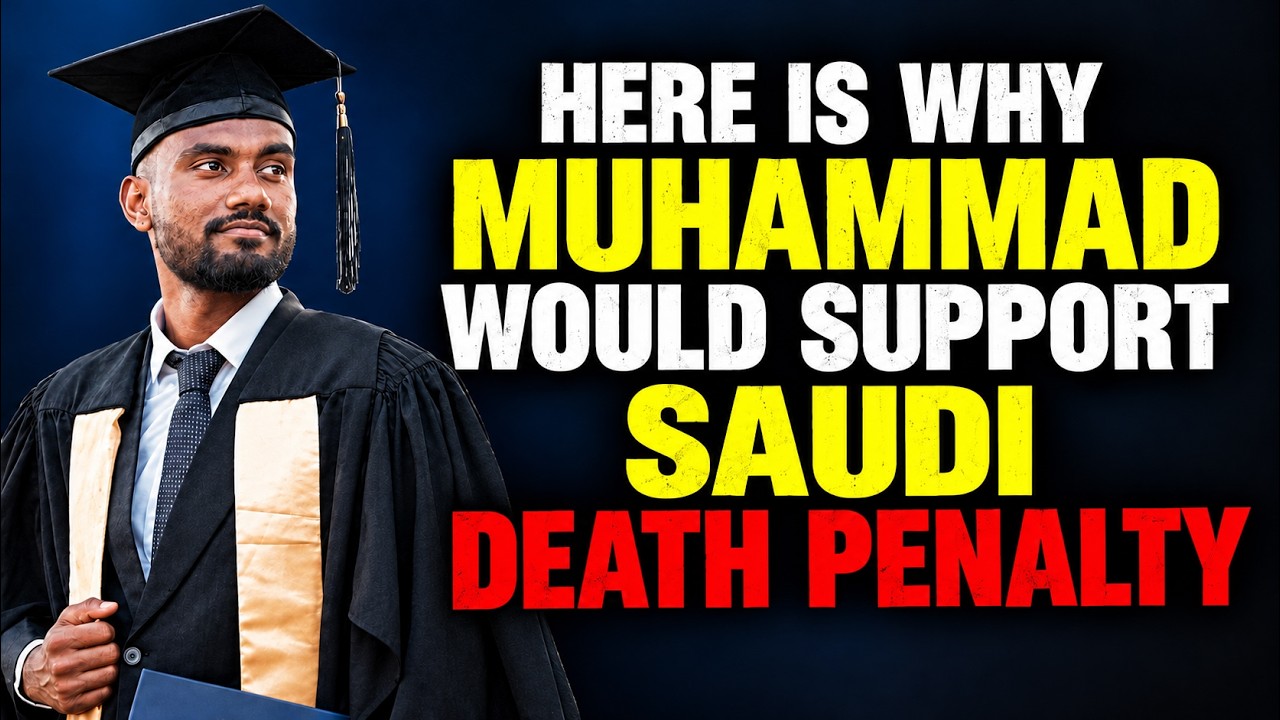
When 24-year-old Sri Lankan engineer Anojan Sivarasa was recently sentenced to death in Saudi Arabia over a single deleted Facebook comment, it sparked an intense global debate. Supporters of the sentence argue that Sharia law strictly demands execution for insulting Islam or the Prophet Muhammad. On the other hand, modern defenders often claim that true Islam is inherently forgiving and that Muhammad himself would have pardoned his critics.
What does the historical record actually show?
In this video, we move past modern opinions and analyze primary classical Islamic sources, including Ibn Ishaq’s Sirat Rasul Allah, Al-Waqidi’s Kitab al-Maghazi, and Ibn Sa'd’s Kitab al-Tabaqat al-Kabir, to examine how cases of public critique, satire, and blasphemy were handled during early Islamic history.
Search Tags / Keywords
Anojan Sivarasa, Saudi Arabia blasphemy law, How would Muhammad react, Blasphemy in Islam, Early Islamic History, An-Nadr ibn al-Harith, Abu Afak, Asma bint Marwan, Kab ibn Zuhayr, Banat Suad, Sirat Rasul Allah, Freedom of Speech, Human Rights, History of Islam, Critical Inquiry.